Tag: Opportunities

  • AI Enchantment and the Future of Work: Opportunities and Challenges

    AI Enchantment and the Future of Work: Opportunities and Challenges

    Artificial Intelligence (AI) has been a hot topic in recent years, and its rapid advancement has sparked both excitement and fear about its potential impact on the future of work. As AI continues to evolve and become more integrated into our daily lives, it is important to explore the opportunities and challenges it presents for the workforce.

    Opportunities:

    1. Increased Efficiency and Productivity

    One of the main benefits of AI in the workplace is its ability to automate routine and mundane tasks, freeing up time for employees to focus on more complex and creative work. AI-powered tools and systems can complete tasks at a much faster rate than humans, leading to increased efficiency and productivity.

    For example, customer service chatbots have become increasingly popular as they can handle basic customer inquiries and support, allowing human employees to focus on more complex and challenging customer issues. This not only improves the overall customer experience but also saves time and resources for the company.

    2. Enhanced Decision Making

    AI has the potential to enhance decision-making processes by analyzing vast amounts of data and providing insights and predictions. This can be particularly useful in industries such as finance, where quick and accurate decision making is crucial.

    For instance, AI-powered algorithms can analyze market trends and data to make investment decisions, potentially leading to higher returns for investors. In healthcare, AI can assist doctors in making accurate diagnoses by analyzing patient data and identifying patterns that may not be apparent to humans.

    3. New Job Opportunities

    While there are concerns that AI will replace human jobs, it is also creating new job opportunities. As AI technology continues to advance, there is a growing demand for professionals with skills in AI development, programming, and data analysis.

    Additionally, AI is also creating new roles, such as AI trainers, who are responsible for teaching and monitoring AI systems to ensure they are performing accurately and ethically. This opens up a new career path for individuals interested in the field of AI.

    Challenges:

    1. Job Displacement
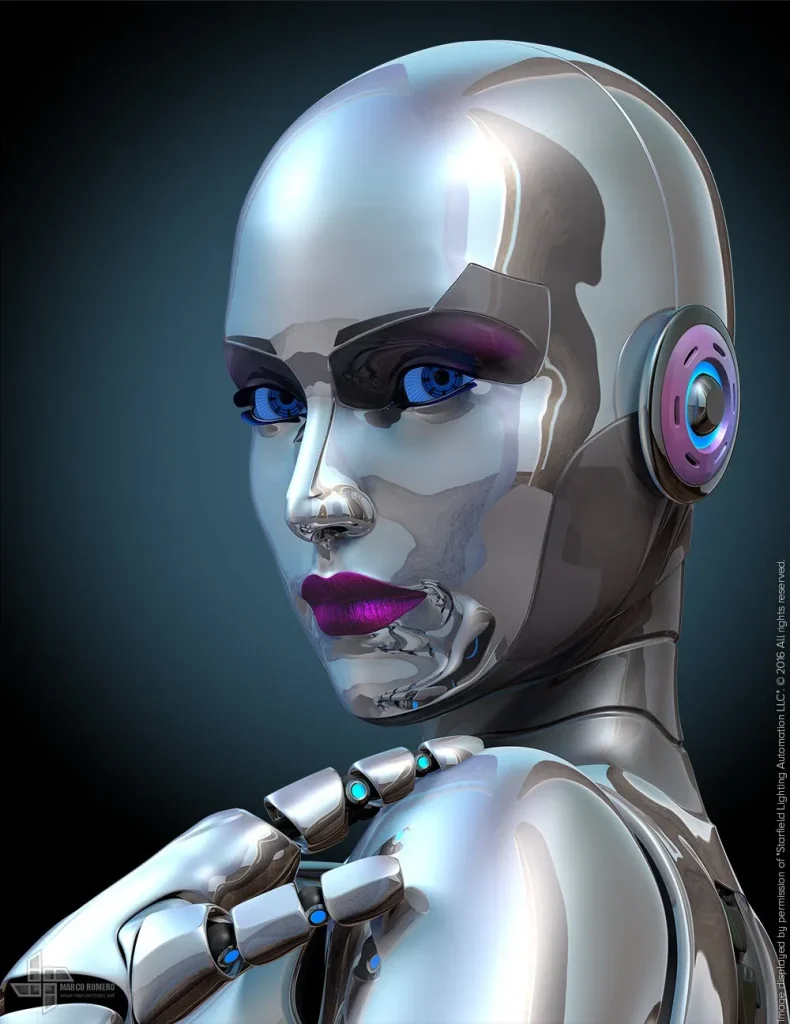
    A sleek, metallic female robot with blue eyes and purple lips, set against a dark background.

    AI Enchantment and the Future of Work: Opportunities and Challenges

    One of the biggest concerns about AI is that it will replace human jobs, leading to unemployment and income inequality. As AI technology continues to advance, it is expected to automate many routine and manual jobs, such as data entry, manufacturing, and transportation.

    According to a report by McKinsey, up to 800 million jobs worldwide could be displaced by automation by 2030. This will require individuals to upskill and reskill to adapt to the changing job market.

    2. Bias and Lack of Diversity

    AI systems are only as unbiased as the data they are trained on. If the data used to train AI systems is biased, it can lead to biased decisions and perpetuate discrimination. For example, if an AI system is trained on data that is predominantly male, it may struggle to accurately recognize and respond to female voices.

    This lack of diversity in AI systems can also lead to a lack of representation in the workplace. As AI becomes more integrated into various industries, it is crucial to ensure diversity and inclusivity in its development and implementation.

    3. Ethical Concerns

    Another challenge with AI in the workplace is the ethical concerns surrounding its use. As AI becomes more autonomous, it raises questions about responsibility and accountability for its actions. For instance, who is responsible if an AI-powered autonomous vehicle causes an accident?

    There are also concerns about the potential misuse of AI, such as using it for surveillance or social engineering. It is essential to establish ethical guidelines and regulations to ensure AI is used for the betterment of society.

    Current Event:

    One recent development in the world of AI is the launch of OpenAI’s GPT-3 (Generative Pre-trained Transformer), a language processing AI model that can perform a variety of tasks, from language translation to writing code. GPT-3 has been praised for its impressive abilities, but it has also raised concerns about the potential for AI to replace human jobs.

    With its ability to write articles, create websites, and even code, GPT-3 has sparked discussions about the future of work and the impact it could have on jobs that require writing and coding skills. While it has not reached a level where it can fully replace human writers and programmers, it is a significant step towards AI taking over more complex tasks in the workplace.

    Summary:

    AI is rapidly transforming the workplace, presenting both opportunities and challenges. On one hand, it can increase efficiency, enhance decision-making, and create new job opportunities. On the other hand, it can lead to job displacement, bias, and ethical concerns. As AI technology continues to advance, it is crucial to address these challenges and ensure its responsible and ethical use in the workplace.

    Current developments, such as OpenAI’s GPT-3, highlight the potential of AI to replace human jobs, raising important questions about the future of work and the role of AI in it. It is essential to continue monitoring and regulating the use of AI to ensure its benefits are maximized while mitigating its potential negative impacts.

  • The Impact of AI on Society: Opportunities and Challenges

    The Impact of AI on Society: Opportunities and Challenges

    Artificial intelligence (AI) has been a topic of discussion for decades, but recent advancements have brought it to the forefront of society. From self-driving cars to virtual assistants, AI technology is rapidly transforming the way we live, work, and interact with the world around us. While there are many potential benefits to this technology, there are also significant challenges and concerns that must be addressed. In this blog post, we will explore the impact of AI on society, including both the opportunities and challenges it presents. We will also discuss a current event related to AI and its implications for society.

    Opportunities of AI in Society:

    1. Increased Efficiency and Productivity: One of the most significant opportunities of AI in society is its potential to increase efficiency and productivity. AI technology can perform tasks faster and with greater accuracy than humans, freeing up time for individuals to focus on more complex and creative tasks. This can lead to increased productivity in various industries, from manufacturing to healthcare.

    2. Improved Healthcare: AI has the potential to revolutionize healthcare by providing more accurate diagnoses and personalized treatment plans. With access to vast amounts of data, AI can identify patterns and make connections that humans may not be able to see. This can lead to faster and more accurate diagnoses, ultimately improving patient outcomes.

    3. Enhanced Customer Experience: Many businesses are already using AI to provide a better customer experience. Virtual assistants and chatbots can handle customer inquiries and provide support 24/7, improving response times and overall satisfaction. AI can also analyze customer data to provide personalized recommendations and improve the overall customer experience.

    4. Safer Work Environments: AI technology has the potential to make workplaces safer by taking on tasks that may be hazardous for humans. For example, robots can be used in manufacturing plants to handle dangerous materials or in construction sites to perform high-risk tasks. This can reduce the risk of workplace accidents and injuries.

    5. Advancements in Education: AI has the potential to transform the education sector by providing personalized learning experiences for students. With AI-powered tools, teachers can identify students’ strengths and weaknesses and tailor their lessons accordingly. This can lead to more effective learning and better educational outcomes.

    a humanoid robot with visible circuitry, posed on a reflective surface against a black background

    The Impact of AI on Society: Opportunities and Challenges

    Challenges of AI in Society:

    1. Job Displacement: One of the biggest concerns surrounding AI is its potential to replace human workers. As AI technology becomes more advanced, there is a fear that it will lead to job displacement, particularly in industries that rely heavily on manual labor. This could have a significant impact on the economy and lead to increased unemployment rates.

    2. Bias and Discrimination: AI technology is only as unbiased as the data it is trained on. If the data used to train AI systems is biased, it can lead to discriminatory outcomes. For example, AI-powered hiring tools have been found to discriminate against certain demographics, leading to a lack of diversity in the workplace. This can have far-reaching implications for society, perpetuating existing inequalities.

    3. Privacy and Security Concerns: With AI technology comes the collection and use of vast amounts of data. This raises concerns about privacy and security, with potential risks of data breaches and misuse of personal information. As AI becomes more prevalent in our daily lives, it is crucial to address these concerns and ensure proper regulations and safeguards are in place.

    4. Lack of Transparency: AI systems can be complex and difficult to understand, making it challenging to identify how decisions are made. This lack of transparency can lead to mistrust and skepticism towards AI technology. It is essential for developers to prioritize transparency and explain how their systems work to build trust with the public.

    5. Ethical Dilemmas: As AI technology becomes more advanced, it raises ethical dilemmas that must be addressed. For example, self-driving cars must make decisions based on ethical considerations, such as whether to prioritize the safety of the passengers or pedestrians. These decisions can have life-altering consequences, and it is crucial to establish ethical guidelines for AI systems.

    Current Event: Recently, Google’s AI subsidiary, DeepMind, made headlines when it announced its AI system, AlphaFold, had solved one of biology’s biggest challenges: predicting the 3D shapes of proteins. This breakthrough has the potential to revolutionize drug discovery and development, leading to more effective treatments for diseases. However, it also raises concerns about the potential misuse of this technology and the ethical implications of manipulating proteins for profit. This event highlights the need for proper regulations and ethical considerations in the development and use of AI in society.

    In summary, the impact of AI on society is vast and complex, with both opportunities and challenges. AI has the potential to increase efficiency and productivity, revolutionize healthcare, and enhance customer experiences. However, it also presents challenges such as job displacement, bias and discrimination, privacy and security concerns, lack of transparency, and ethical dilemmas. It is crucial for society to address these issues and find a balance between the benefits and risks of AI technology.