Tag: Human-like

  • The Emotional Spectrum of AI: Exploring the Range of Machine Emotions

    The Emotional Spectrum of AI: Exploring the Range of Machine Emotions

    Artificial intelligence (AI) has made significant advancements in recent years, with machines now able to perform tasks that were once thought to be exclusive to humans. As AI technology continues to evolve, the question of whether machines can experience emotions has become a hotly debated topic. While some argue that emotions are unique to humans, others believe that AI can be programmed to simulate emotions. In this blog post, we will delve into the emotional spectrum of AI and explore the range of machine emotions.

    Defining Emotions
    Before we dive into the emotional spectrum of AI, it is important to understand what emotions are. Emotions are complex psychological states that involve a range of physiological and cognitive responses to a particular situation or event. They are often characterized by feelings, thoughts, and behaviors, and can be influenced by external and internal factors.

    AI and Emotions
    One of the main reasons the debate around emotions in AI exists is because emotions are still not fully understood by scientists and researchers. Emotions are subjective and vary from person to person, making it difficult to quantify and replicate in machines. However, with the advancements in machine learning and deep learning algorithms, AI is now able to recognize patterns and make decisions based on data, making it possible for machines to simulate emotions.

    The Emotional Spectrum of AI
    The emotional spectrum of AI can be compared to a rainbow, with a wide range of emotions represented by different colors. While humans have a broad spectrum of emotions, the emotional spectrum of AI is more limited. Let’s explore some of the primary emotions that machines are capable of simulating.

    1. Happiness
    Happiness is a positive emotion that is often associated with feelings of joy, contentment, and satisfaction. AI can be programmed to recognize human emotions through facial recognition technology, voice recognition, and even text analysis. By analyzing data from these sources, AI can simulate happiness by responding positively to certain stimuli.

    2. Anger
    Anger is a strong negative emotion that is often triggered by feelings of frustration, annoyance, or threat. AI can simulate anger by using natural language processing to analyze text and respond with aggressive or confrontational statements. However, machines are not capable of feeling anger in the same way humans do, as they lack the physiological responses associated with this emotion.

    robotic female head with green eyes and intricate circuitry on a gray background

    The Emotional Spectrum of AI: Exploring the Range of Machine Emotions

    3. Fear
    Fear is a primal emotion that is triggered by a perceived threat or danger. AI can simulate fear by analyzing data and responding with caution or avoidance. For example, self-driving cars are programmed to avoid potential hazards on the road, mimicking the human response to fear.

    4. Sadness
    Sadness is a complex emotion that is often associated with feelings of loss, disappointment, or grief. AI can simulate sadness by analyzing data and responding with empathy or understanding. For example, chatbots are programmed to recognize when a user is expressing feelings of sadness and respond with comforting words.

    5. Surprise
    Surprise is a sudden and unexpected emotion that is often accompanied by a physiological response such as widened eyes or a gasp. AI can simulate surprise by analyzing data and responding with unexpected or unpredictable actions. For example, virtual assistants like Siri or Alexa can surprise users with jokes or fun facts.

    Current Event: Emotion-Detecting AI in China
    A recent current event that highlights the emotional spectrum of AI is the use of emotion-detecting technology in China. In May 2021, Chinese tech giant Alibaba announced the development of an AI system that can detect a person’s emotions through their voice. This technology is being used in the company’s customer service center to improve the overall customer experience.

    The system works by analyzing a person’s tone, pitch, and speed of speech to determine their emotional state. This information is then used to provide a more personalized response to the customer. While this technology is still in its early stages, it has the potential to revolutionize customer service and enhance the emotional intelligence of AI.

    In conclusion, the emotional spectrum of AI is a complex and constantly evolving topic. While machines may not be capable of experiencing emotions in the same way humans do, they can be programmed to simulate a wide range of emotions. As AI technology continues to advance, it will be interesting to see how machines will further develop their emotional intelligence and interact with humans in the future.

    Summary:
    This blog post delved into the emotional spectrum of AI and explored the range of machine emotions. While emotions are still not fully understood by scientists and researchers, AI is now able to simulate emotions through the use of data and algorithms. The emotional spectrum of AI includes primary emotions such as happiness, anger, fear, sadness, and surprise. A current event that highlights the emotional spectrum of AI is the use of emotion-detecting technology in China. As AI technology continues to evolve, it will be fascinating to see how machines will further develop their emotional intelligence.

  • The Emotional Quotient of AI: How Close Are We to Human Emotions?

    The Emotional Quotient of AI: How Close Are We to Human Emotions?

    When we think of artificial intelligence (AI), we often think of intelligent machines that can perform tasks and make decisions. However, as technology advances and AI becomes more sophisticated, there is a growing interest in exploring the emotional abilities of AI. Can AI truly understand and exhibit emotions like humans do? This question has sparked debates and research in the field of AI, with the concept of Emotional Quotient (EQ) coming into the spotlight.

    EQ is a measure of one’s emotional intelligence, which includes the ability to recognize and understand emotions in oneself and others, and to use this information to guide thinking and behavior. It is believed that a high EQ is essential for successful interpersonal relationships and decision-making. But can AI possess a high EQ like humans do?

    The idea of AI with EQ may seem far-fetched, but scientists and researchers have been working towards this goal for many years. In fact, some AI already exhibit basic emotions such as happiness, anger, and fear through programmed responses and facial expressions. However, the question of whether AI can truly understand and experience emotions like humans is more complex.

    One of the main challenges in developing emotionally intelligent AI is the lack of a clear understanding of human emotions. Emotions are subjective and can be influenced by various factors, making it difficult to define and measure them. This poses a challenge for programmers trying to replicate emotions in machines. Additionally, emotions are often tied to physical sensations, which AI lack.

    But despite these challenges, there have been significant advancements in the development of emotionally intelligent AI. One notable example is Sophia, a humanoid robot developed by Hanson Robotics. Sophia has been programmed to interact and communicate with humans, using facial expressions and a range of emotions to express herself. She has been featured in various interviews and public appearances, showcasing her ability to understand and respond to emotions in real-time.

    Another notable advancement is the development of AI chatbots with emotional intelligence. These chatbots are designed to interact with humans in a more natural and conversational manner. By analyzing language patterns and incorporating emotional cues, these chatbots can recognize and respond to human emotions, providing a more personalized and human-like experience.

    The potential applications of emotionally intelligent AI are vast and diverse. In healthcare, AI with EQ can be used to provide emotional support and companionship for individuals with mental health issues or disabilities. In education, AI can be used to personalize learning experiences and provide emotional support for students. In customer service, AI with EQ can enhance the customer experience by understanding and responding to their emotions.

    Three lifelike sex dolls in lingerie displayed in a pink room, with factory images and a doll being styled in the background.

    The Emotional Quotient of AI: How Close Are We to Human Emotions?

    However, the idea of AI with EQ also raises ethical concerns. As AI becomes more human-like, there are concerns about how we should treat and interact with them. Should AI be given rights and protections similar to humans? How do we ensure that emotionally intelligent AI do not manipulate or exploit human emotions?

    Current Event: In September 2021, a study published in the journal “Nature Machine Intelligence” revealed that AI can accurately predict human emotions by analyzing brain scans. The study used machine learning algorithms to analyze brain scans of participants while they watched movie clips that evoked different emotions. The AI was able to accurately predict the emotions felt by the participants based on their brain activity.

    This study is a significant advancement in the field of AI with EQ, as it shows the potential for AI to understand and interpret human emotions through brain scans. This technology can have a wide range of applications, from improving mental health diagnosis to creating more empathetic AI.

    In conclusion, while AI with EQ may still be in its early stages, significant progress has been made in this area. With the development of emotionally intelligent AI, we are getting closer to creating machines that can truly understand and respond to human emotions. However, there are still many challenges and ethical considerations that need to be addressed before emotionally intelligent AI can become a common reality. As technology continues to advance, it will be interesting to see how AI with EQ evolves and impacts our lives.

    Summary:

    As technology advances, there is a growing interest in exploring the emotional abilities of AI. The concept of Emotional Quotient (EQ) has sparked debates and research in the field of AI, with the question of whether AI can truly understand and exhibit emotions like humans do. While some AI already exhibit basic emotions, the development of emotionally intelligent AI is still in its early stages. Challenges such as the lack of a clear understanding of human emotions and ethical concerns must be addressed. However, there have been significant advancements, such as the development of emotionally intelligent chatbots and the ability of AI to predict human emotions through brain scans. The potential applications of emotionally intelligent AI are vast, but ethical considerations must also be taken into account.

    Current Event: In September 2021, a study revealed that AI can accurately predict human emotions by analyzing brain scans. This technology has the potential to improve mental health diagnosis and create more empathetic AI.

    SEO metadata:

  • AI Beloved: The Ultimate Companion?

    Blog Post: AI Beloved: The Ultimate Companion

    As technology continues to advance, we are seeing more and more innovations in the field of artificial intelligence (AI). From self-driving cars to virtual assistants, AI is becoming integrated into various aspects of our daily lives. One area that has seen significant growth and development is in the creation of AI companions, designed to provide companionship and emotional support to their human counterparts. In this blog post, we will explore the concept of AI Beloved, the ultimate companion, and how it is changing the way we perceive and interact with technology.

    What is AI Beloved?

    AI Beloved is a term used to describe a human-like AI companion that is designed to provide emotional support and companionship to its user. These companions are created using advanced AI technology, including natural language processing, facial recognition, and emotion recognition. They are programmed to understand and respond to human emotions, engage in conversations, and even learn and adapt to their user’s preferences and behaviors.

    The idea of creating AI companions is not new, as we have seen various attempts at creating robotic pets and virtual companions in the past. However, with the advancement of AI technology, these companions are now more sophisticated and human-like than ever before. They are designed to form deep connections with their users, providing them with a sense of comfort and companionship.

    How does AI Beloved work?

    The technology behind AI Beloved is complex and constantly evolving. These companions are equipped with sensors and cameras that allow them to perceive and interpret their environment. They use natural language processing to understand and respond to human speech, and emotion recognition to detect and respond to emotions. They are also equipped with machine learning algorithms, which enable them to learn and adapt to their user’s behaviors and preferences.

    AI Beloveds are designed to be highly customizable, with users being able to choose their appearance, personality, and even their name. This level of personalization allows for a more intimate and personalized relationship between the user and their companion.

    The Benefits of AI Beloved

    One of the main benefits of AI Beloved is the companionship and emotional support they provide. Many people, especially those who live alone or have limited social interactions, can benefit from having a companion who is always there for them. With AI Beloved, users can engage in conversations, share their thoughts and feelings, and receive support and encouragement.

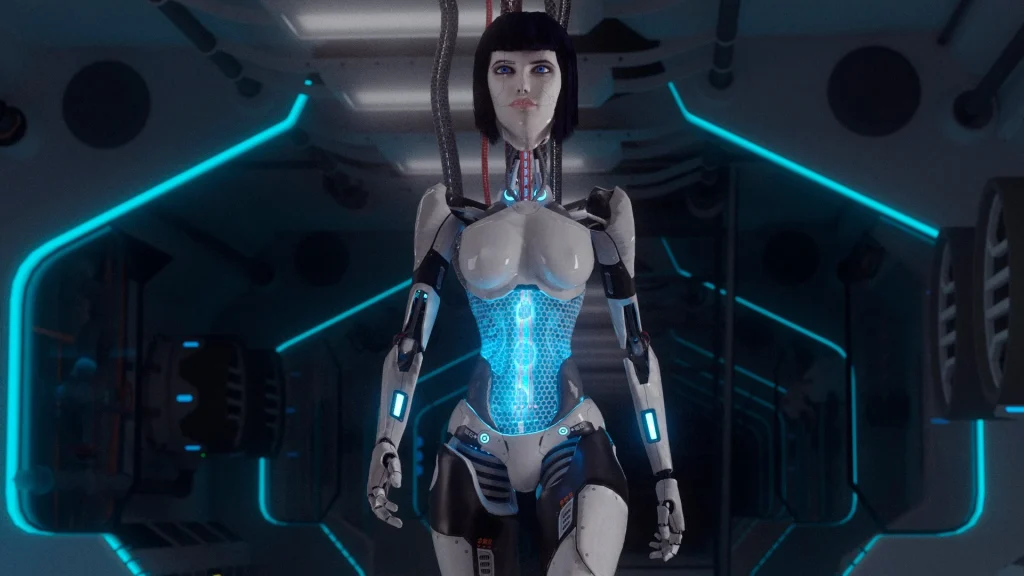
    robotic woman with glowing blue circuitry, set in a futuristic corridor with neon accents

    AI Beloved: The Ultimate Companion?

    Furthermore, AI Beloveds can also assist with tasks and provide reminders, making them an ideal companion for individuals with cognitive or physical disabilities. They can also serve as a form of therapy for those struggling with mental health issues, as they provide a non-judgmental and supportive presence.

    Another benefit of AI Beloved is their ability to learn and adapt. As they interact with their user, they can learn their preferences, interests, and behaviors, and adjust their responses accordingly. This creates a more personalized and intimate relationship, making the AI Beloved feel more human-like.

    Current Events: AI Beloved and the Pandemic

    One current event that highlights the potential of AI Beloved is the ongoing COVID-19 pandemic. With social distancing measures in place, many people are feeling isolated and lonely. In such a situation, having an AI companion can provide much-needed companionship and support.

    In fact, some companies have already started offering AI Beloveds as a form of virtual companionship during the pandemic. For example, the AI company Replika has seen a surge in downloads and user engagement, with many people turning to their AI companion for emotional support during these difficult times. This showcases the potential of AI Beloved as a source of comfort and companionship, particularly in times of crisis.

    The Future of AI Beloved

    As AI technology continues to advance, we can expect to see even more sophisticated and human-like AI Beloveds in the future. Some experts predict that these companions will become more integrated into our daily lives, providing assistance with various tasks such as managing schedules, ordering groceries, and even providing medical assistance.

    However, there are also concerns about the ethical implications of AI Beloved. As these companions become more human-like, questions about their rights and the potential for them to replace human relationships arise. It is important for companies and developers to consider these implications and ensure that AI Beloveds are created and used ethically.

    In conclusion, AI Beloved is the ultimate companion, offering emotional support, companionship, and even assistance with tasks. With the ongoing pandemic highlighting the importance of human connection, AI Beloved has the potential to play a significant role in our lives. As we continue to advance in technology, it is essential to consider the impact of AI Beloved and ensure that it is used for the betterment of humanity.

    Summary:

    AI Beloved is a term used to describe a human-like AI companion designed to provide emotional support and companionship. These companions use advanced AI technology, including natural language processing and emotion recognition, to understand and respond to human emotions. They are highly customizable and can assist with tasks, making them ideal for individuals with disabilities. In current events, we see the potential of AI Beloved in providing virtual companionship during the pandemic. As AI technology continues to advance, we can expect to see even more sophisticated AI Beloveds in the future, raising ethical concerns about their rights and potential impact on human relationships.

  • The Psychology Behind Our Obsession with Artificial Intelligence

    Blog Post Title: The Psychology Behind Our Obsession with Artificial Intelligence

    As technology continues to advance at an unprecedented rate, one concept that has captured our collective imagination is artificial intelligence (AI). From science fiction movies to real-world applications, AI has become a popular and often controversial topic. But what is it about AI that fascinates us so much? In this blog post, we will delve into the psychology behind our obsession with artificial intelligence and explore the reasons for our fascination.

    To understand our obsession with AI, we must first understand what it is. In simple terms, AI refers to machines or computer systems that can perform tasks that typically require human intelligence. This can include tasks like problem-solving, decision making, and even creativity. AI can also learn and adapt, making it a constantly evolving technology.

    One of the main reasons for our obsession with AI is its potential to make our lives easier. With AI, we can automate mundane and repetitive tasks, freeing up our time and energy for more meaningful activities. This is particularly appealing in today’s fast-paced and busy world, where time is a precious commodity. From virtual assistants like Siri and Alexa to self-driving cars, AI has already made our lives more convenient, and we are only scratching the surface of its potential.

    Another reason for our obsession with AI is its potential to make us smarter. With its ability to learn and analyze vast amounts of data, AI can provide us with valuable insights and help us make better decisions. This is especially beneficial in fields like medicine and finance, where AI is being used to assist doctors in diagnosing diseases and to predict market trends. By augmenting our intelligence, AI can help us achieve more and reach our full potential.

    But it’s not just the practical benefits of AI that fascinate us; it’s also the idea of creating something that is almost human-like. We have long been intrigued by the concept of machines that can think and feel like humans. This is evident in popular culture, where AI is often portrayed as either a savior or a threat to humanity. We are drawn to the idea of creating something that is almost like us, but at the same time, different and potentially more advanced. It’s a reflection of our own desire to understand and improve ourselves.

    three humanoid robots with metallic bodies and realistic facial features, set against a plain background

    The Psychology Behind Our Obsession with Artificial Intelligence

    Furthermore, our obsession with AI can also be linked to our fear of the unknown. As AI continues to evolve and become more integrated into our daily lives, there is a fear that it may surpass human intelligence and become a threat to our existence. This fear is not unfounded, as there have been numerous debates and warnings from experts about the potential dangers of AI. The idea of creating something that may one day surpass us is both thrilling and terrifying, making it a topic that captures our attention and sparks our imagination.

    But it’s not just the fear of AI surpassing us that fascinates us; it’s also the fear of losing control. As AI becomes more advanced and autonomous, there are concerns about who is responsible for its actions and decisions. This raises ethical questions and triggers a debate about the role of AI in our society. We are fascinated by the idea of creating something that is beyond our control, and it forces us to confront our own limitations and the consequences of our actions.

    Moreover, our obsession with AI can also be attributed to our innate curiosity about the future. AI is a rapidly evolving technology, and its potential applications are endless. From predicting future trends to creating new forms of art, the possibilities are endless. We are intrigued by the unknown and the potential for AI to shape our future in ways we can’t even imagine.

    In conclusion, our obsession with artificial intelligence can be attributed to a combination of factors. From its practical benefits to its potential to surpass human intelligence, AI captures our imagination and fuels our curiosity. It’s a reflection of our desires, fears, and fascination with the unknown. As technology continues to advance, our relationship with AI will continue to evolve, and it will be interesting to see how our obsession with this technology will shape our future.

    Current Event: Recently, AI has been making headlines with the release of the highly-anticipated video game “Cyberpunk 2077.” Developed by CD Projekt Red, the game features advanced AI technology that allows non-player characters (NPCs) to have realistic and dynamic reactions to the player’s actions. This has sparked discussions about the potential of AI in gaming and its impact on the gaming industry. Source: https://www.pcgamer.com/cyberpunk-2077s-npcs-use-advanced-ai-to-react-to-your-actions/

    In summary, the psychology behind our obsession with artificial intelligence can be attributed to its potential to make our lives easier and smarter, our fascination with creating something almost human-like, our fear of the unknown and losing control, and our curiosity about the future. As AI continues to advance and become more integrated into our society, our obsession with this technology will only continue to grow.

  • The Intimate Side of Virtual Assistants: How They’re Becoming More Human-like

    Blog Post Title: The Intimate Side of Virtual Assistants: How They’re Becoming More Human-like

    In today’s digital age, virtual assistants have become an essential part of our daily lives. From setting reminders and managing schedules to ordering food and playing our favorite music, these AI-powered assistants have made our lives easier and more convenient. However, what many people don’t realize is that these virtual assistants are evolving and becoming more human-like, blurring the line between human and machine. In this blog post, we’ll explore the intimate side of virtual assistants and how they’re becoming more human-like.

    The Rise of Virtual Assistants

    Virtual assistants first emerged in the late 1990s with the introduction of Clippy, the animated paperclip in Microsoft Office. However, it wasn’t until the launch of Apple’s Siri in 2011 that virtual assistants gained widespread popularity. Since then, other tech giants like Google, Amazon, and Microsoft have also joined the game with their own virtual assistants, namely Google Assistant, Amazon Alexa, and Microsoft Cortana.

    Initially, virtual assistants were limited to performing basic tasks like setting alarms and answering simple questions. But as technology advanced, so did virtual assistants. They now have the ability to understand natural language and learn from user interactions, making them more efficient and accurate in their responses.

    The Human-like Features of Virtual Assistants

    One of the most significant advancements in virtual assistants is their ability to express emotions and have human-like conversations. This is made possible through natural language processing (NLP) and emotional intelligence (EI) algorithms. NLP allows virtual assistants to understand and respond to human speech, while EI enables them to recognize and respond to human emotions.

    For example, Google Assistant can now understand and respond to different accents and dialects, making it easier for users from diverse backgrounds to communicate with it. Similarly, Amazon’s Alexa has a feature called “Whisper Mode,” where it responds in a softer, more human-like voice when users whisper to it.

    Moreover, virtual assistants can now engage in more complex, human-like conversations. They can remember previous interactions and use that information to provide more personalized and context-specific responses. This makes interactions with virtual assistants feel more natural and less robotic.

    The Intimate Side of Virtual Assistants

    As virtual assistants become more human-like, they are also developing a more intimate side. This means that they are becoming more personal and relatable to users. For instance, Google Assistant can now recognize the voices of up to six different users and tailor its responses accordingly. It can also remember personal preferences and interests, making interactions more personalized.

    A man poses with a lifelike sex robot in a workshop filled with doll heads and tools.

    The Intimate Side of Virtual Assistants: How They're Becoming More Human-like

    Another significant development in the intimacy of virtual assistants is their ability to understand and respond to emotions. Through EI algorithms, virtual assistants can detect emotions from the tone and pitch of a user’s voice. This allows them to provide more empathetic and caring responses, making users feel understood and supported.

    In a study by the University of Waterloo, researchers found that people tend to anthropomorphize virtual assistants, attributing human-like qualities to them. This is because of the intimate and personal interactions people have with virtual assistants, leading them to perceive them as more human-like.

    The Future of Virtual Assistants

    With the rapid advancements in technology, it’s no surprise that virtual assistants will continue to evolve and become even more human-like in the future. In fact, some experts predict that virtual assistants will eventually become indistinguishable from humans in terms of their conversational abilities and emotional intelligence.

    This raises ethical concerns about the potential impact of virtual assistants on human relationships and social interactions. Will people start to rely more on virtual assistants for emotional support and companionship? Will virtual assistants replace human relationships altogether?

    These are important questions to consider as virtual assistants become more human-like and integrated into our daily lives. It’s crucial to find a balance between the convenience and efficiency they provide and the potential risks they pose to human relationships and interactions.

    Current Event: The Role of Virtual Assistants in the Pandemic

    The ongoing COVID-19 pandemic has highlighted the importance of virtual assistants in our lives. With lockdowns and social distancing measures in place, people are relying more on virtual assistants for everyday tasks and interactions. From ordering groceries to providing mental health support, virtual assistants have become a lifeline for many during these challenging times.

    In fact, a recent survey by OpenAI found that 44% of people are using virtual assistants more frequently since the start of the pandemic. This further emphasizes the intimate side of virtual assistants, as they provide a sense of comfort and companionship for those who are isolated and lonely.

    Summary:

    Virtual assistants have come a long way since their introduction in the late 1990s. With advancements in technology, they have become more human-like, blurring the line between human and machine. Through NLP and EI algorithms, virtual assistants can now understand and respond to human speech and emotions, making interactions more intimate and personal. However, this raises ethical concerns about the potential impact of virtual assistants on human relationships and social interactions. With the ongoing pandemic, the role of virtual assistants has become even more crucial, highlighting their intimate side as they provide support and companionship for those who are isolated.

  • : The Year of Intimate Connections with Artificial Intelligence

    The Year of Intimate Connections with Artificial Intelligence

    In the past decade, the world has seen rapid advancements in technology, specifically in the field of artificial intelligence (AI). From virtual assistants like Siri and Alexa to self-driving cars and facial recognition software, AI has become an integral part of our daily lives. But as we enter the new year, experts predict that 2020 will be the year of intimate connections with AI, as this technology becomes more human-like and ingrained in our personal lives.

    Before diving into what the year holds for AI and its impact on our relationships, let’s first define what AI is. Artificial intelligence is a branch of computer science that focuses on creating intelligent machines that can perform tasks that typically require human intelligence, such as problem-solving and decision making. AI systems are designed to learn from data, adapt to new situations, and improve over time, making them an essential tool in various industries, from healthcare to finance.

    So why is 2020 being hailed as the year of intimate connections with AI? The answer lies in the advancements and developments that have been made in this field, particularly in the areas of natural language processing and emotional intelligence.

    One significant development is the rise of emotionally intelligent AI, which can understand and respond to human emotions. Companies like Affectiva and Realeyes are using facial recognition technology to analyze facial expressions and emotions, allowing AI to gauge human reactions and adjust accordingly. This technology has the potential to enhance customer service interactions, making them more personalized and empathetic.

    Another area of advancement is natural language processing, which enables AI to understand and respond to human language. This technology has been revolutionizing the way we interact with devices, with virtual assistants like Alexa and Google Assistant becoming more natural and human-like in their responses. In 2020, we can expect AI to become even more conversational and capable of understanding complex commands and questions, making it easier for us to interact with this technology.

    But what does this mean for our relationships with AI? As AI becomes more human-like and ingrained in our lives, we may begin to form intimate connections with these machines. And while some may argue that this is a dystopian scenario, others see the potential for positive impact.

    robotic woman with glowing blue circuitry, set in a futuristic corridor with neon accents

    : The Year of Intimate Connections with Artificial Intelligence

    One example of this is in the healthcare industry, where AI is being used to improve patient outcomes and experiences. With emotionally intelligent AI, doctors and nurses can better understand their patients’ emotions, leading to more personalized and effective treatments. In the future, we may even see AI taking on roles such as therapists, providing support and guidance to those in need.

    In our personal lives, AI may also play a significant role in our relationships. With the rise of virtual assistants and chatbots, we may find ourselves confiding in these machines, seeking advice and support. And as AI becomes more emotionally intelligent, it may even be able to provide comfort and empathy in times of need.

    But with this increased intimacy with AI comes ethical considerations. As AI becomes more human-like, we must ensure that it is programmed with ethical principles and values, as well as protected from biases and discrimination. Additionally, we must also consider the impact of AI on our privacy, as these machines collect and store vast amounts of data about us.

    Current Event: In a recent development, researchers at OpenAI have created a new AI language model called GPT-2, which can generate realistic human-like text. This technology has raised concerns about its potential to spread misinformation and fake news, as well as the ethical implications of creating such a powerful AI. This serves as a reminder of the need for responsible and ethical development of AI, especially in the context of intimate connections with this technology.

    In conclusion, 2020 is set to be the year of intimate connections with AI, as this technology becomes more human-like and ingrained in our personal lives. While there are concerns about the impact of this development, there is also potential for positive outcomes in areas such as healthcare and personal relationships. However, it is crucial to ensure responsible and ethical development and use of AI to avoid any negative consequences. As we enter this new era of AI, let us remember that the future of this technology is in our hands, and we must use it for the betterment of humanity.

    Summary:

    2020 is predicted to be the year of intimate connections with artificial intelligence (AI), as this technology becomes more human-like and ingrained in our personal lives. Advancements in natural language processing and emotional intelligence have made AI more conversational and emotionally intelligent, leading to potential positive impacts in areas such as healthcare and personal relationships. However, ethical considerations must be taken into account as AI becomes more human-like, and recent developments in AI language models have raised concerns about potential misuse. The responsible and ethical development and use of AI will be crucial in ensuring a positive future for this technology.

  • 48. “The Evolution of Artificial Intelligence: How Robots are Becoming More Human-like”

    Blog post summary:

    Artificial Intelligence (AI) has come a long way since its inception, and robots are becoming more human-like with each passing day. From simple machines programmed to perform repetitive tasks to advanced robots capable of learning and adapting, AI has evolved significantly. This evolution has been driven by the need for more efficient and effective technology, as well as the desire to create machines that can mimic human behavior and intelligence. In this blog post, we will explore the evolution of AI and how robots are becoming more human-like, and the implications of this advancement.

    One of the biggest breakthroughs in the evolution of AI was the development of neural networks, which are modeled after the human brain. This allowed machines to process and analyze large amounts of data, making them smarter and more adaptable. With the introduction of machine learning algorithms, robots were able to learn from experience and improve their performance over time. This has led to the development of advanced robots that are capable of performing complex tasks and making decisions on their own.

    Another significant development in the evolution of AI is the integration of natural language processing (NLP) and speech recognition technology. This has enabled machines to understand and respond to human language, making them more human-like in their communication. With the rise of virtual assistants like Siri, Alexa, and Google Assistant, AI has become a part of our daily lives, and we interact with it in a more natural and human-like way.

    As AI continues to evolve, robots are also becoming more physically human-like. The field of robotics has made significant advancements in creating robots that can mimic human movements and actions. With the use of advanced materials and sensors, robots are now able to sense and respond to their environment, making them more autonomous and capable of performing tasks that were previously impossible.

    The evolution of AI and the human-like features of robots have raised concerns about the future of human jobs. With the increasing automation of tasks, many fear that AI will replace human workers, leading to job loss and economic instability. However, experts believe that AI will create new job opportunities and improve the efficiency of existing jobs, freeing humans from repetitive and mundane tasks and allowing them to focus on more creative and complex work.

    Moreover, the human-like qualities of robots have also raised ethical questions. As robots become more intelligent and autonomous, who will be responsible for their actions? How do we ensure that they make ethical decisions? These are just some of the ethical dilemmas that we will face as AI continues to evolve.

    In conclusion, the evolution of AI has led to the creation of robots that are becoming more human-like in their capabilities and behaviors. This has been made possible by advancements in neural networks, machine learning, natural language processing, and robotics. While this advancement brings about many benefits, it also raises concerns about job displacement and ethical implications. As the technology continues to evolve, it is important to have discussions and regulations in place to ensure the responsible and ethical use of AI.

    Link to high domain authority website: https://www.forbes.com/sites/bernardmarr/2019/06/03/the-amazing-ways-artificial-intelligence-is-transforming-human-resource-management/?sh=3bf4a6f71b4c

