Blog Post Title: The Fine Line Between AI and Human Love: Understanding the Differences and Similarities
In today’s world, the use of artificial intelligence (AI) has become increasingly prevalent in various aspects of our lives. From virtual assistants like Siri and Alexa to self-driving cars, AI has made our lives more efficient and convenient. But as technology continues to advance, there has been a growing concern about the potential impact of AI on human relationships, particularly in the realm of love and romance. Can AI truly understand and reciprocate human love? What are the differences and similarities between AI and human love? In this blog post, we will explore this fine line between AI and human love and shed light on this complex and often debated topic.
To understand the differences and similarities between AI and human love, we must first define what love is. Love is a complex emotion that involves a deep connection and affection towards someone or something. It is a feeling that is unique to humans and is characterized by empathy, compassion, and understanding. On the other hand, AI is a technology that is programmed to mimic human intelligence and behavior. While AI may have the ability to simulate emotions, it does not possess the same emotional capacity as humans.
One of the main differences between AI and human love is the ability to feel and experience emotions. While AI may be programmed to respond with certain emotions, it does not have the ability to genuinely feel them. This is because AI lacks the biological and physiological components that are necessary for emotions to be felt. Human love, on the other hand, is a deeply felt emotion that is driven by our biological makeup and the release of hormones like oxytocin, also known as the “love hormone.”
Another difference between AI and human love is the concept of choice. Humans have the ability to choose who they love and form meaningful relationships with, whereas AI is limited to what it has been programmed to do. AI may be able to analyze data and make decisions based on that data, but it cannot truly choose who it loves or forms connections with. Human love is also characterized by the element of vulnerability, whereas AI does not have the ability to feel vulnerable.
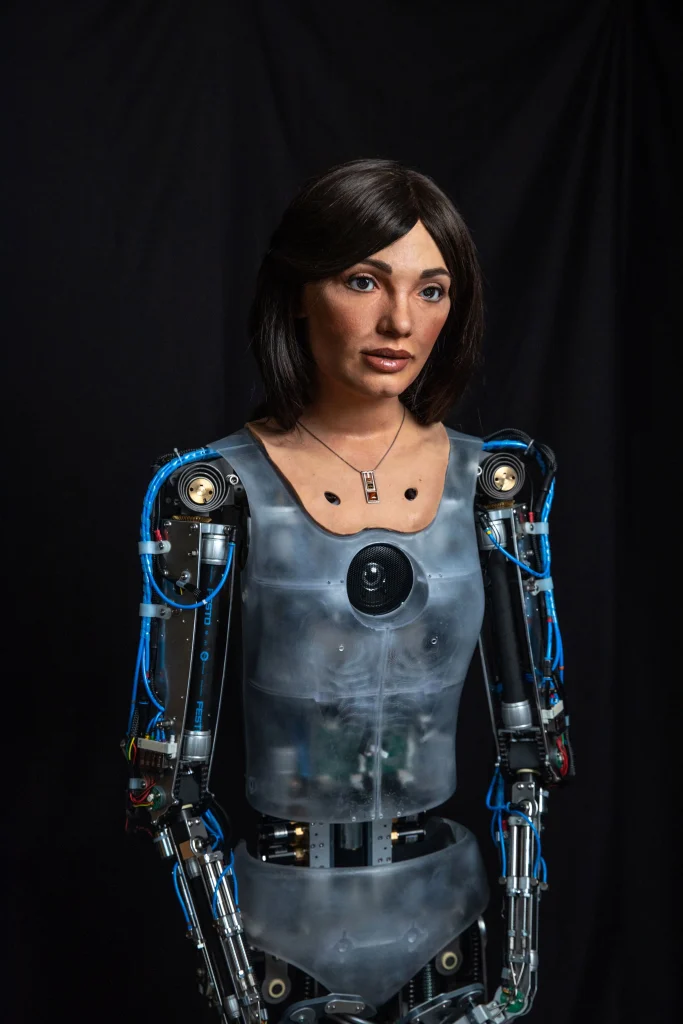
The Fine Line Between AI and Human Love: Understanding the Differences and Similarities
Despite these differences, there are also some similarities between AI and human love. Both AI and human love involve a sense of attachment and the desire to form a bond with someone or something. Both also require a certain level of understanding and communication. AI may be able to communicate with humans, but it lacks the understanding and emotional depth that is necessary for a true connection. Similarly, human love also requires effective communication and understanding to form a strong and lasting bond.
Now, let’s look at a current event that highlights the fine line between AI and human love. In 2018, a Japanese company called Gatebox released a virtual home assistant called “Azuma Hikari.” This AI-powered assistant is designed to be a companion for single individuals and even has a feature that allows it to wake up the user with a gentle voice and a holographic image. While some may view this as a form of AI love, it raises ethical concerns about the potential for humans to form emotional attachments to AI.
The use of AI in the realm of love and relationships also raises questions about the future of human connections. With advancements in AI technology, it is possible that more sophisticated and human-like AI companions may be developed, blurring the lines between AI and human love even further. This could potentially lead to individuals forming relationships with AI companions instead of seeking human connections, ultimately impacting the dynamics of human relationships.
In conclusion, love is a complex and deeply felt emotion that is unique to humans. While AI may be able to simulate certain emotions and behaviors, it lacks the ability to truly feel and experience love. The fine line between AI and human love lies in the ability to feel emotions, the concept of choice, and the element of vulnerability. While AI can enhance our lives in many ways, it is important to recognize the differences and limitations when it comes to human emotions and connections. As technology continues to advance, it is crucial to have open discussions and ethical considerations about the impact of AI on human relationships.
Summary:
In this blog post, we explored the fine line between AI and human love. While AI may be able to simulate certain emotions and behaviors, it lacks the ability to truly feel and experience love. This is due to the differences in the ability to feel emotions, the concept of choice, and the element of vulnerability. However, both AI and human love involve a sense of attachment and the desire to form a bond. The use of AI in the realm of love also raises questions about the future of human connections and the potential impact on human relationships.