The Fascination with AI: A Closer Look at Machine Learning
Artificial Intelligence (AI) has become a hot topic in recent years, with advancements in technology allowing us to create machines that can learn and make decisions on their own. From self-driving cars to virtual assistants, the potential applications of AI seem endless. But what exactly is AI, and why are we so fascinated by it?
At its core, AI is the intelligence displayed by machines, as opposed to the natural intelligence displayed by humans and animals. It involves creating algorithms and computer programs that can analyze data, recognize patterns, and make decisions without direct human input. Within the realm of AI, there is a specific field known as machine learning, which is responsible for the self-learning capabilities of machines.
Machine learning is a subset of AI that focuses on creating algorithms and models that can learn from data and improve their performance over time. It is based on the idea that machines can be programmed to learn from experience, just like humans. This is achieved through the use of complex mathematical models and algorithms that allow machines to analyze vast amounts of data and make predictions or decisions based on that data.
The concept of machine learning has been around for decades, but recent advancements in technology, especially in the field of big data, have propelled its development. With the increase in data generated by humans and machines, there is a need for systems that can process and make sense of this data in a timely and efficient manner. Machine learning provides a solution to this problem by enabling machines to learn and adapt to new data without being explicitly programmed to do so.
One of the most significant benefits of machine learning is its potential to automate tasks that would otherwise require human input. This not only saves time and resources but also allows humans to focus on more complex and creative tasks. For example, self-driving cars use machine learning algorithms to analyze data from sensors and make decisions on steering, braking, and acceleration without human input. This has the potential to revolutionize the transportation industry and make our roads safer.
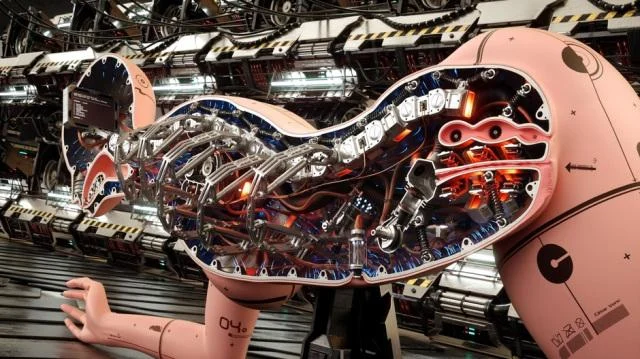
The Fascination with AI: A Closer Look at Machine Learning
Another area where machine learning has shown great promise is in healthcare. With the help of machine learning algorithms, medical professionals can analyze vast amounts of patient data to identify patterns and make accurate diagnoses. This has the potential to improve patient outcomes and save lives. Additionally, machine learning can also be used for drug discovery and development, making the process faster and more efficient.
Despite its numerous benefits, there are also concerns surrounding the development and use of AI and machine learning. One of the most significant concerns is the potential loss of jobs as machines replace human workers. As AI and machine learning continue to advance, it is essential to find ways to mitigate the negative impact on the workforce, such as retraining and reskilling programs.
Another concern is the potential misuse of AI, particularly in the form of biased or discriminatory decision-making. Since machines learn from the data they are given, they may exhibit the same biases present in the data. This can lead to discrimination against certain groups or perpetuate existing societal inequalities. It is crucial to address these issues and ensure that AI and machine learning are used ethically and responsibly.
Current Event: In recent news, Google’s DeepMind AI has made a breakthrough in the field of biology by solving a protein folding problem that has puzzled scientists for over 50 years. This problem involves predicting the 3D structure of a protein based on its amino acid sequence, which is crucial for understanding how proteins function and developing new drugs. DeepMind’s AI, called AlphaFold, was able to accurately predict the structure of a protein with a margin of error comparable to experimental methods. This breakthrough has the potential to greatly accelerate drug discovery and lead to new treatments for diseases. (Source: https://www.bbc.com/news/science-environment-55059935)
In conclusion, the fascination with AI and machine learning stems from their potential to revolutionize various industries and improve our daily lives. While there are concerns and ethical considerations to be addressed, the potential benefits of this technology cannot be ignored. As we continue to make advancements in AI and machine learning, it is essential to ensure that they are used for the betterment of society.
Summary:
Artificial Intelligence (AI) and machine learning have become popular topics due to their potential to create self-learning machines. Machine learning, a subset of AI, involves creating algorithms and models that can learn from data and improve their performance over time. Recent advancements in technology, especially in big data, have propelled the development of machine learning. Its benefits include automating tasks, improving healthcare, and drug discovery. However, there are concerns about the potential loss of jobs and the misuse of AI. A recent breakthrough by Google’s DeepMind AI in solving a protein folding problem showcases the potential of AI in accelerating drug discovery. Despite concerns, the fascination with AI and machine learning continues to grow, and it is essential to ensure their ethical and responsible use.