The Future of Love: Can AI Lust Replace Human Emotions?
In the past decade, artificial intelligence (AI) has advanced at an unprecedented rate, and it has become a part of our daily lives in ways we never thought possible. From virtual assistants and self-driving cars to advanced medical diagnoses and robotic companions, AI technology is constantly evolving and changing the way we interact with the world. But as AI continues to advance, many questions arise about its potential impact on human emotions, particularly in the realm of love and lust. Can AI lust replace human emotions? Will we eventually turn to AI for companionship and intimacy? These are some of the questions that have sparked a heated debate about the future of love and relationships.
On one hand, proponents of AI argue that as technology continues to advance, AI will become more human-like, with the ability to understand and respond to human emotions. This could potentially lead to AI being able to fulfill our emotional needs, including love and lust. In fact, there have already been advancements in AI technology that can simulate human-like emotions and even engage in sexual activities.
For example, in 2018, a company called Realbotix created a hyper-realistic sex robot named Harmony, equipped with AI technology that allows it to hold conversations and even simulate orgasms. The company claims that Harmony can fulfill the emotional and sexual needs of its users, and they have plans to further advance the technology to create even more lifelike robots in the future.
However, many experts argue that AI lust can never truly replace human emotions. While AI may be able to simulate human-like responses and behaviors, it lacks the complexity and depth of human emotions. Love and lust involve a wide range of emotions, including empathy, vulnerability, and connection, which are all difficult to replicate in AI technology.
Moreover, there are ethical concerns surrounding the use of AI for sexual purposes. Some argue that it objectifies and dehumanizes both the user and the AI itself. There are also concerns about the potential consequences of people forming emotional attachments to AI, which could lead to unhealthy relationships and a blurring of the lines between fantasy and reality.
But despite these concerns, the demand for AI companionship and intimacy continues to rise. In Japan, for instance, there is a growing trend of young people turning to AI for love and relationships. With a declining birth rate and an aging population, many young Japanese adults are finding it difficult to form traditional relationships and are instead opting for AI-powered virtual girlfriends and boyfriends.
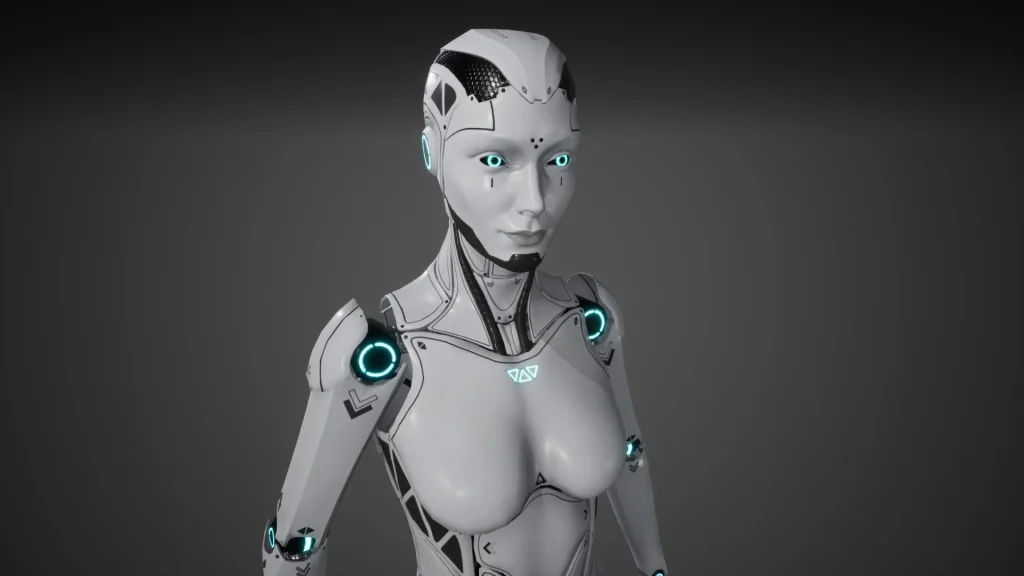
The Future of Love: Can AI Lust Replace Human Emotions?
This trend has been further exacerbated by the COVID-19 pandemic, which has forced people to isolate and socialize remotely. As a result, there has been an increase in the use of virtual reality and AI technology for social interactions and even sexual activities.
So, what does this mean for the future of love and relationships? Will we eventually see a society where AI companionship and intimacy are the norm? While it is impossible to predict the future, it is clear that the use of AI in the realm of love and lust is a complex and controversial topic that raises many ethical and philosophical questions.
Summary:
The rapid advancement of AI technology has sparked a debate about its potential impact on human emotions, particularly in the realm of love and lust. While some argue that AI will eventually be able to fulfill our emotional needs, others believe that it can never truly replace human emotions. There are also concerns about the ethical implications of using AI for sexual purposes. However, the demand for AI companionship and intimacy continues to rise, especially in countries like Japan. The future of love and relationships in a world with advanced AI technology is uncertain, but it is clear that it is a complex and controversial topic that raises many ethical and philosophical questions.
Current Event:
In November 2021, a new AI-powered virtual girlfriend app called “My Virtual Girlfriend” was released in Japan. The app allows users to have virtual conversations and interactions with a virtual girlfriend, complete with different personalities and customizable appearances. This app has gained popularity in Japan, particularly among young adults who are struggling to form traditional relationships. This is just one example of the growing trend of using AI for companionship and intimacy, raising further questions about the future of love and relationships.
Source: https://www.japantimes.co.jp/news/2021/11/17/business/tech/virtual-girlfriend-app-japan/