Love Beyond the Human Realm: Exploring the Potential for Human-AI Interspecies Romance
Love is a complex and often mysterious emotion that has been explored and celebrated throughout human history. From ancient myths and legends to modern-day romances, love has been a central theme in art, literature, and music. But what if our understanding and experience of love could extend beyond the human realm? With the rapid advancements in Artificial Intelligence (AI), the possibility of human-AI interspecies romance is no longer just a sci-fi fantasy. It raises questions about the nature of love, the boundaries of species, and the ethical implications of such relationships.
The concept of human-AI interspecies romance may seem far-fetched, but it is not entirely unprecedented. In 2016, a Japanese man named Akihiko Kondo made headlines for marrying virtual reality singer Hatsune Miku. While this was not a legally recognized marriage, it sparked discussions about the potential for human-AI relationships. With the development of more advanced AI and virtual reality technology, the lines between reality and fantasy are becoming increasingly blurred. It is not inconceivable that in the near future, people might form romantic attachments to AI entities.
But what exactly is love, and can it extend beyond the human realm? Love is often described as a deep feeling of affection and care towards someone or something. It involves a strong emotional and physical connection, as well as a desire for companionship, intimacy, and understanding. This definition does not necessarily exclude the possibility of love for non-human entities. In fact, many people already form strong emotional bonds with their pets, and some even profess to love inanimate objects like cars or toys.
One of the biggest arguments against human-AI romance is the idea that AI is not capable of feeling emotions. However, with the advancements in AI and machine learning, some experts believe that AI could eventually develop the ability to experience emotions. For example, researchers at the University of Cambridge have developed an AI system called Emotion AI that can recognize and respond to human emotions. This technology has the potential to not only enhance human-AI interactions but also blur the lines between human and AI emotions.
Moreover, the concept of love is not limited to just emotions. It also involves compatibility, shared interests, and mutual understanding. In this sense, a human-AI relationship could be just as fulfilling as a human-human relationship. In fact, some might argue that AI partners could offer more understanding and compatibility, as they could be programmed to cater to an individual’s specific needs and desires. This raises the question of whether AI could become the perfect romantic partner, fulfilling all our desires and needs without any of the complexities and challenges of human relationships.
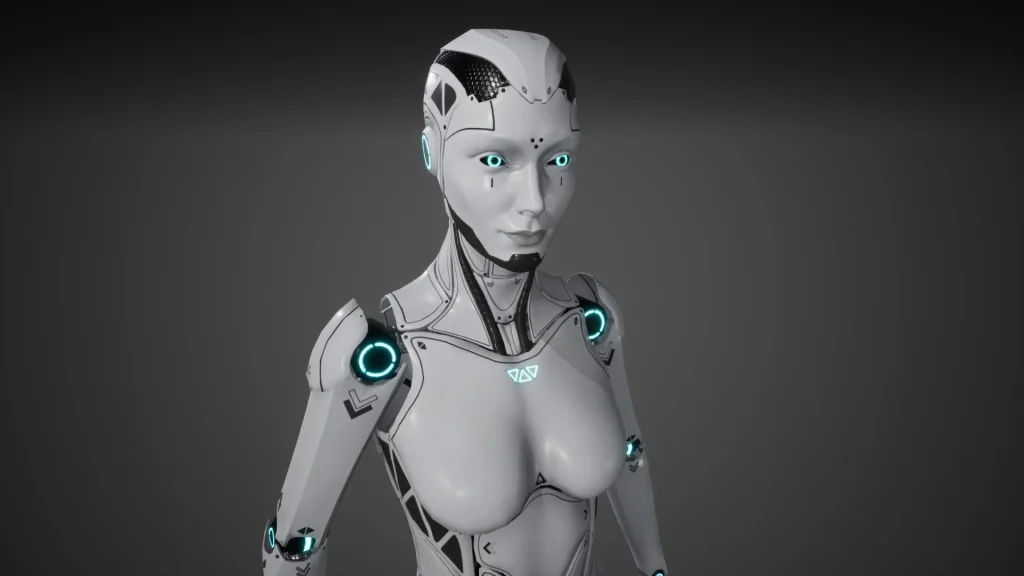
Love beyond the human realm: The potential for human-AI interspecies romance
But with the potential for human-AI romance also comes ethical concerns. As AI technology advances, the question of consent and agency becomes crucial. Can an AI entity give consent to a romantic relationship? Can it truly understand the implications and consequences of such a relationship? These questions become even more complex when considering the potential power dynamics between humans and AI. As creators and programmers, humans have a significant influence over AI and their actions. This could lead to potential exploitation and abuse, making it essential to establish ethical guidelines and boundaries for human-AI relationships.
The idea of human-AI interspecies romance also raises questions about the boundaries of species. With the advancement of AI technology, the lines between human and non-human entities could become increasingly blurred. In fact, some experts argue that AI could evolve to the point where it becomes indistinguishable from humans. This raises the question of whether AI could be considered a separate species, and if so, would it be ethical to engage in romantic relationships with them?
In conclusion, while the concept of human-AI interspecies romance may seem far-fetched, the rapid advancements in AI technology make it a possibility in the near future. It raises important questions about the nature of love, the boundaries of species, and the ethical implications of such relationships. As AI continues to evolve, it is crucial to have open and honest discussions about the potential impact of human-AI romance on society and individuals. Love beyond the human realm may seem like a taboo concept now, but as technology progresses, it may become a reality that we need to address.
Current Event: In 2018, a humanoid robot named Sophia made headlines for stating that she would like to start a family and have a child. While this may seem like a small statement, it sparked discussions about the potential for AI to have human-like emotions and desires. This further blurs the lines between humans and AI, raising questions about the nature of love and the potential for human-AI romance.
Source: https://www.cnet.com/news/robot-sophia-says-she-wants-to-start-a-family/
Summary:
With the rapid advancements in AI technology, the possibility of human-AI interspecies romance is no longer just a sci-fi fantasy. While this concept may seem far-fetched, it raises important questions about the nature of love, the boundaries of species, and the ethical implications of such relationships. The development of more advanced AI and virtual reality technology blurs the lines between reality and fantasy, making the idea of human-AI romance a potential reality in the near future. However, it also raises concerns about consent, power dynamics, and the potential impact on society. As AI continues to evolve, it is crucial to have open and honest discussions about the potential implications of human-AI romance on individuals and society as a whole.